
Why the minimum air change rates have changed in Toolkit
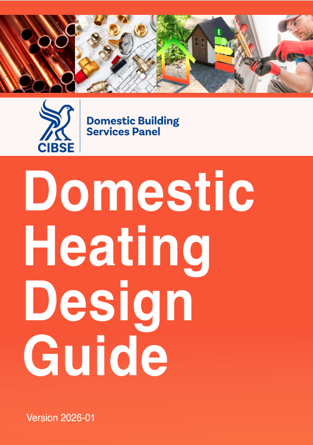
One of the big changes in the updated CIBSE Domestic Heating Design Guide 2026 is the move to new default minimum air change rates for ventilation heat loss calculations.
This is one of the updates we’ve now implemented in Toolkit, and it may change the heat loss results you see, especially for older properties.
What has changed?
In the updated CIBSE DHDG, the minimum air change rate for most habitable rooms is now 0.5 air changes per hour (ACH).
This applies to most rooms including:
- Living rooms
- Bedrooms
- Kitchens
- Bathrooms / W.C.s with windows
Other rooms, such as internal corridors now have a minimum air change rate of 0.0 ACH. Importantly, this now applies regardless of the age of the property.
How this differs from the previous CIBSE guidance
In the 2021 version of the CIBSE Domestic Heating Design Guide, the minimum air change rates varied depending on the room type and the age of the property.
Properties were grouped into Category A, B and C with older properties having higher minimum air change rates.
For example, a living room in a Category A property (pre-2000) may have been given a minimum air change rate of 1.5 ACH, while the same room in a Category C property (post-2006) may have been given 0.5 ACH.
Why the methodology changed
Before BS 12831:2017, these minimum air change rates were one of the main things that determined the ventilation heat loss for a room. The 2017 version of BS 12831 changed this approach.
The calculation now depends much more on:
- the ventilation type,
- the air permeability (AP),
- and any ventilation devices within the room.
The minimum air change rate is still included, but it now acts more as a minimum backstop rather than the main driver of the result.
This means the calculation is intended to reflect how the property is ventilated and how airtight it is rather than relying heavily on broad assumptions based on the age of the property.
Why CIBSE updated the guidance
CIBSE recognised that the older approach was one of the factors contributing to oversized heat loss calculations.
The updated guidance aligns with BS 12831:2017 so that there is not differing guidance across various publications.
What the changes look like in Toolkit
To reflect these updates, Toolkit now includes a number of changes to the ventilation heat loss setup:
1. Air Change Methodology selection
When setting up a heat loss calculation, there is now a dropdown for ‘Air Change Methodology’. This is defaulted to CIBSE DHDG 2026. There is still the option to revert to the older CIBSE DHDG 2021 methodology; however, this is not recommended as the updated methodology better aligns with BS 12831:2017 and MCS.
2. Ventilation devices can now be added room-by-room
You can now add a greater range of ventilation devices directly to any individual room, including:
- Extract fans
- Background vents
- Flues
- Chimneys
This allows the ventilation calculation to better reflect the actual ventilation within the property.
If you have already selected a type of centralised mechanical ventilation, such as MVHR or MEV, you do not need to add vents separately to each room, as these are already accounted for within the calculation.
3. Manual room adjustments are still available
If you want to change the minimum air change rate for a specific room, you can still manually override this within each room. This gives flexibility where a different value is needed for a particular project.
What these changes mean for heat loss calculations
As a result of these changes, you may notice:
- lower ventilation losses in some older properties,
- and a bigger impact from the air permeability value.
This is intentional and reflects the direction of both BS 12831:2017 and the updated CIBSE guidance.
These changes in Toolkit align with:
- the updated CIBSE Domestic Heating Design Guide 2026,
- BS 12831:2017,
- and recent changes made to the MCS Heat Load Calculator.
If you have any questions about these updates or any other Toolkit features, please either contact your consultant, call us on 0161 768 5807 or email the team at [email protected] and we’ll be happy to help.